
A hands-on phonics playset for ages 2 to 8, before the reading gap sets in.
Kids who don't read fluently by 4th grade
fall behind in every subject.
If you’ve ever wondered whether your child is on track, you’re not alone.
4th graders who read fluently can learn faster and more easily than classmates who are still struggling with reading mechanics. The best time to start is before school does.
Square Panda turns screen time into hands-on phonics, so your child learns to sound out words, not guess at them. Their eyes stay mostly on the letters in their hands, not on the screen. They feel each letter as they hear its sound.
Black Friday price $99.98, regular $199.99. Tablet not included.
- Ages 2 to 8
- Hands-on phonics
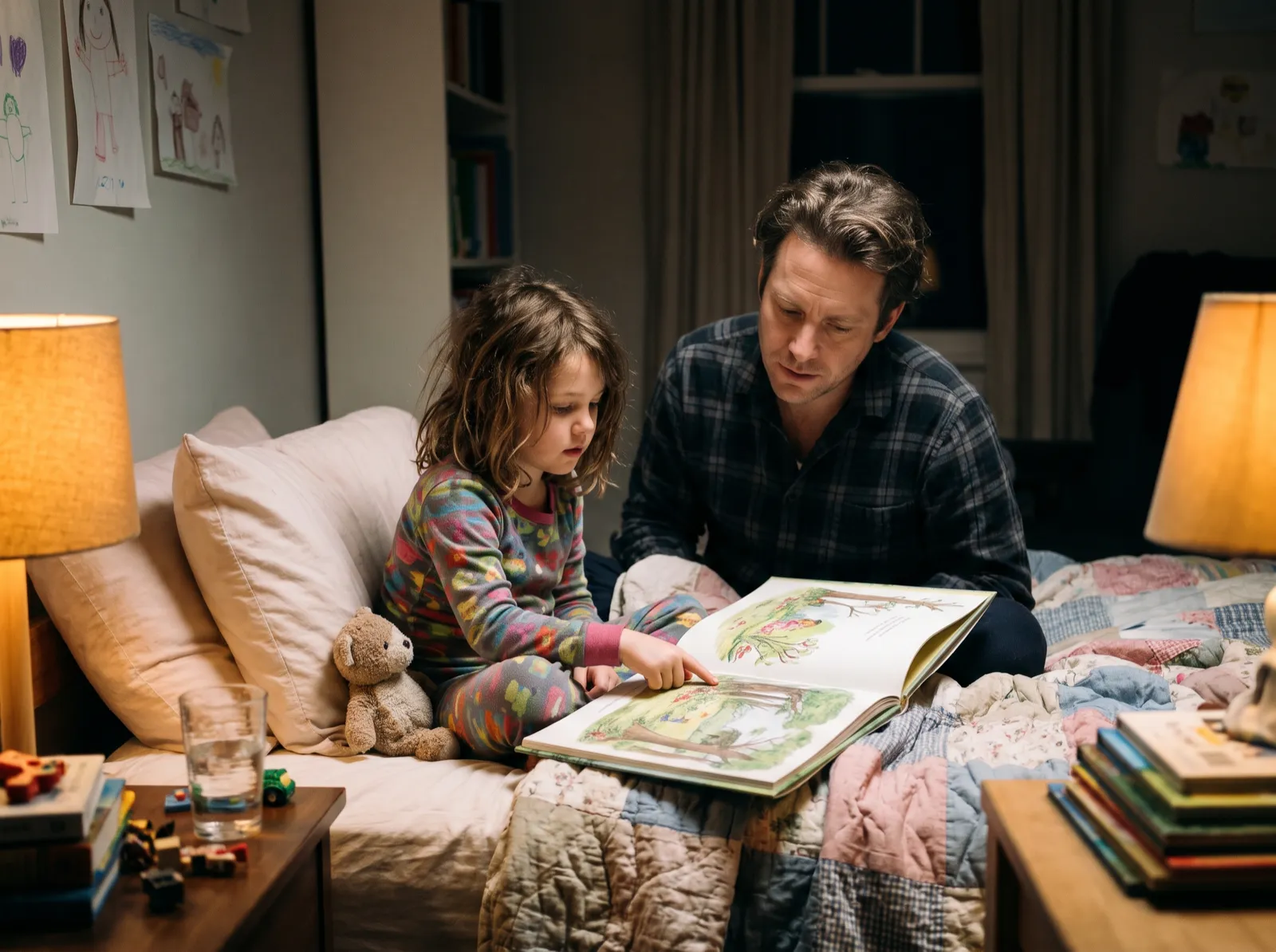
The quiet gap
You can't see the gap until it's big.
You read every night. Their report card says they're doing fine. Then a teacher mentions "reading intervention" and your stomach drops.
You're not alone, and it's not your fault. 88% of parents believe their child reads at grade level, while far fewer than 30% actually do.4 The gap stays quiet in preschool and kindergarten, then shows up in third grade, when reading stops being a subject and becomes how every subject is taught.
Sound familiar?
- They know the alphabet song but freeze on the letter sounds.
- They "read" a favorite book from memory, then can't read the same words on a different page.
- They mispronounce letter sounds.
- They replace the word on the printed page with a word with similar meaning ("Queen" vs "Princess").
- They look at the picture to guess the word.
- They'd rather do anything than read to you.
Why it's happening to so many kids
This isn't about one child. It's generational.
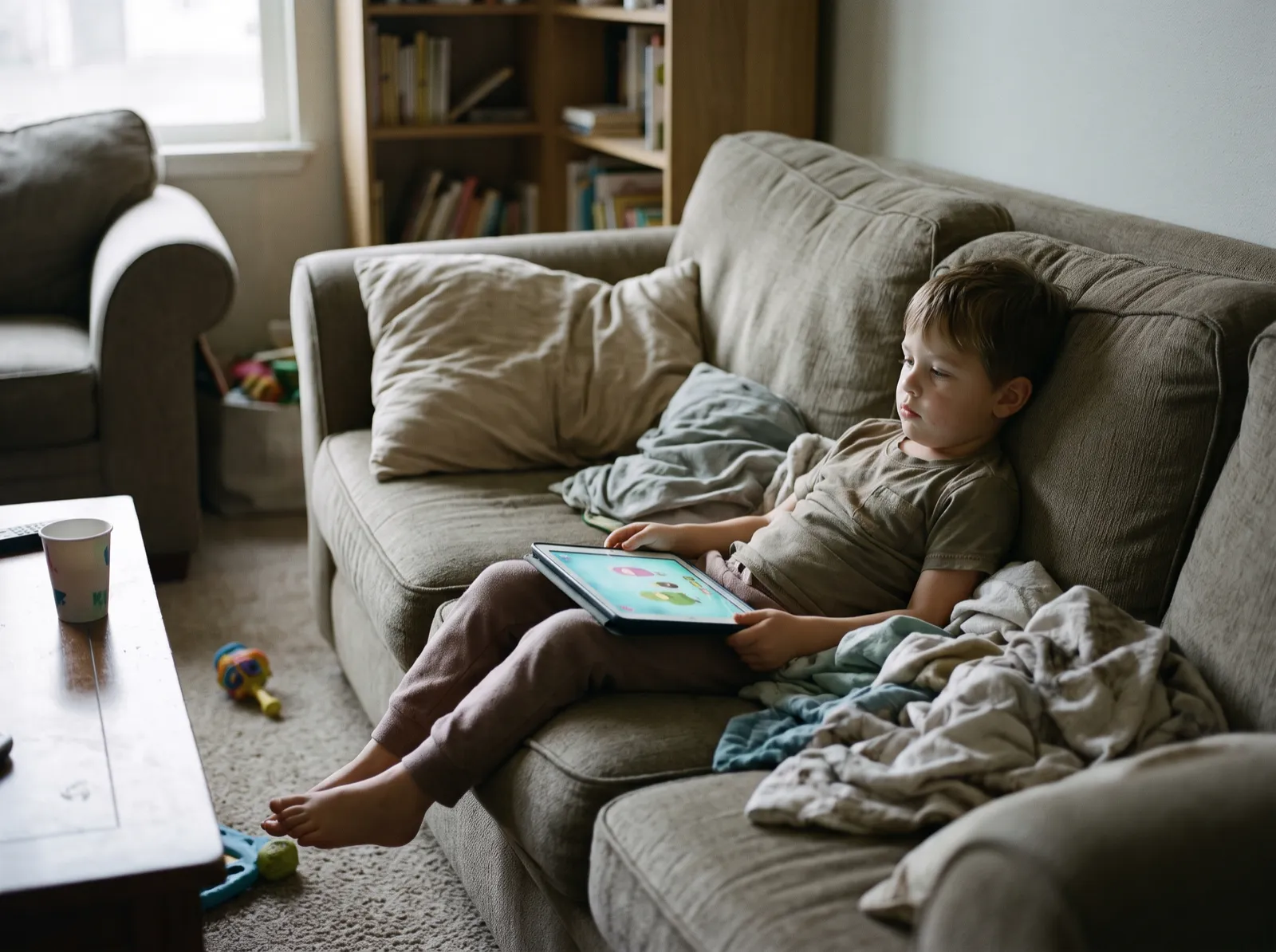
Many kids were taught to guess.
For years, popular programs had children guess words from pictures and context instead of sounding them out. 43 states have since passed laws to bring back phonics, but millions of kids are still taught the old way.5
Help is hard to get.
Most schools offered tutoring, but only about 1 in 10 students received it,6 and the federal recovery money ran out in 2024.7 Many teachers today are still trained in the old way, and don't know how to teach phonics.
Screens fill the gap.
Kids under 9 already spend about 2.5 hours a day on screens.8 If that worries you, you're not alone: 86% of parents say keeping screen time reasonable is a daily priority. The question is whether any of that time builds reading skills.
US fourth graders don't read proficiently,1 and children not reading well by the end of third grade are four times more likely than strong readers not to finish high school on time.3
Why it matters so much, so early
Until third grade, children learn to read. After that, they read to learn.
Math word problems, science, history, instructions. Children not reading well by the end of third grade are four times more likely than strong readers not to finish high school on time. The window to make it easy is now, between 2 and 8.
It starts with sounds
Reading starts with the ear.
English has up to 44 sounds9. Hearing those sounds, called phonemic awareness, is one of the two best predictors of how well a child will learn to read10.
Most kids don't pick it up on their own. In a classic study, only 17% of kindergartners could break a spoken word into its sounds11. And about 9 in 10 young struggling readers have a weakness in exactly this skill12. Nationally, about 69% of 4th graders read below Proficient1. Square Panda starts with letter play that teaches letter sounds your child can hear, see and touch.
How Square Panda helps
A phonics playset your child plays with, not just watches.
It started with one child: co-founder Andy Butler built the first games for his own daughter when he couldn't find anything that both engaged and helped her.
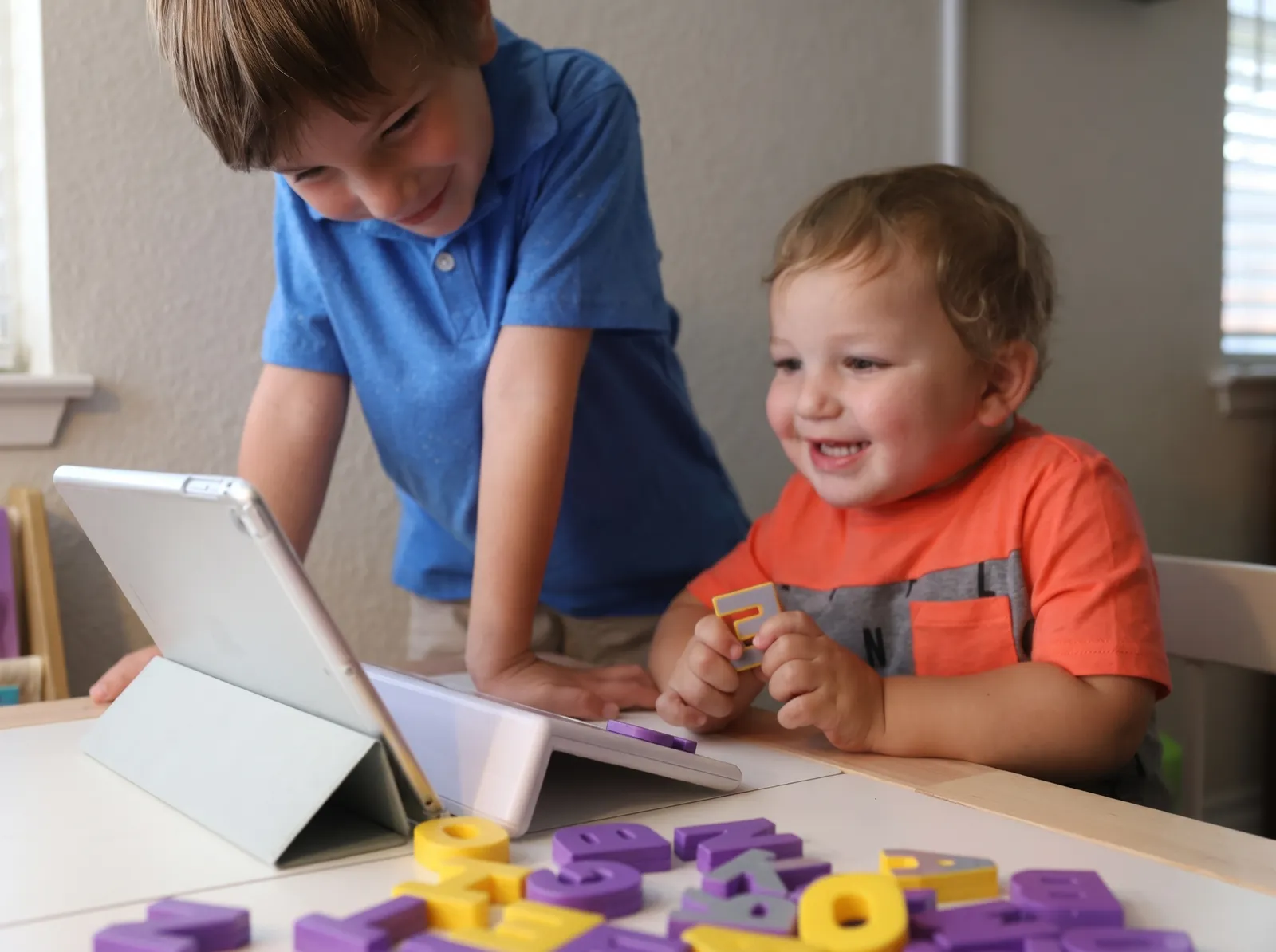
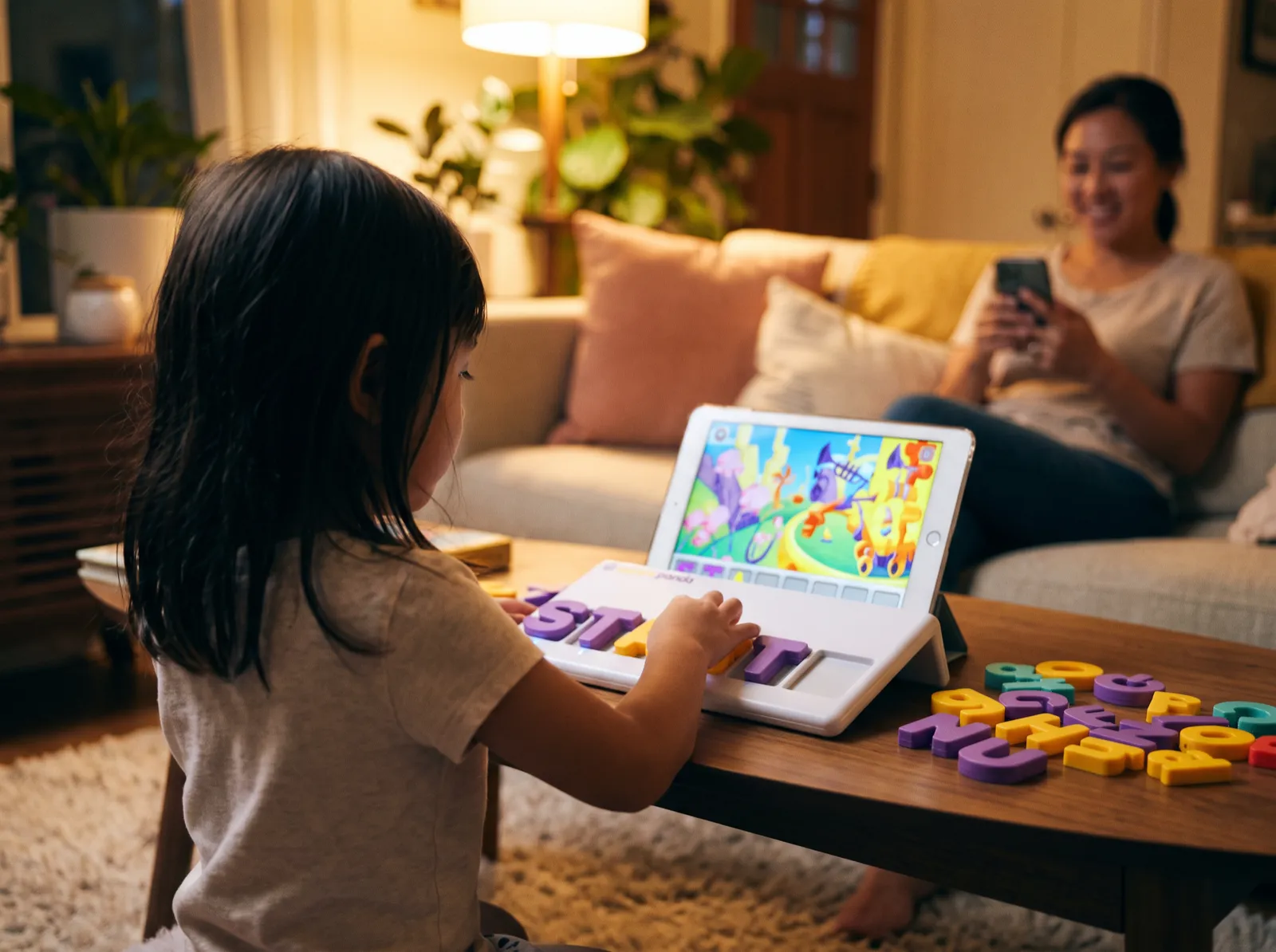
They learn to read by doing: they pick up real letters, place them on the playset, and the game on your tablet responds right away. This is called distracted viewing. Your child's eyes keep moving between the letters and the tablet: a glance at the screen to hear the word, then back down to build the next one. It's the opposite of a show, where a child sits still and stares hypnotically. In a typical session, only about half the time is spent looking at the tablet.
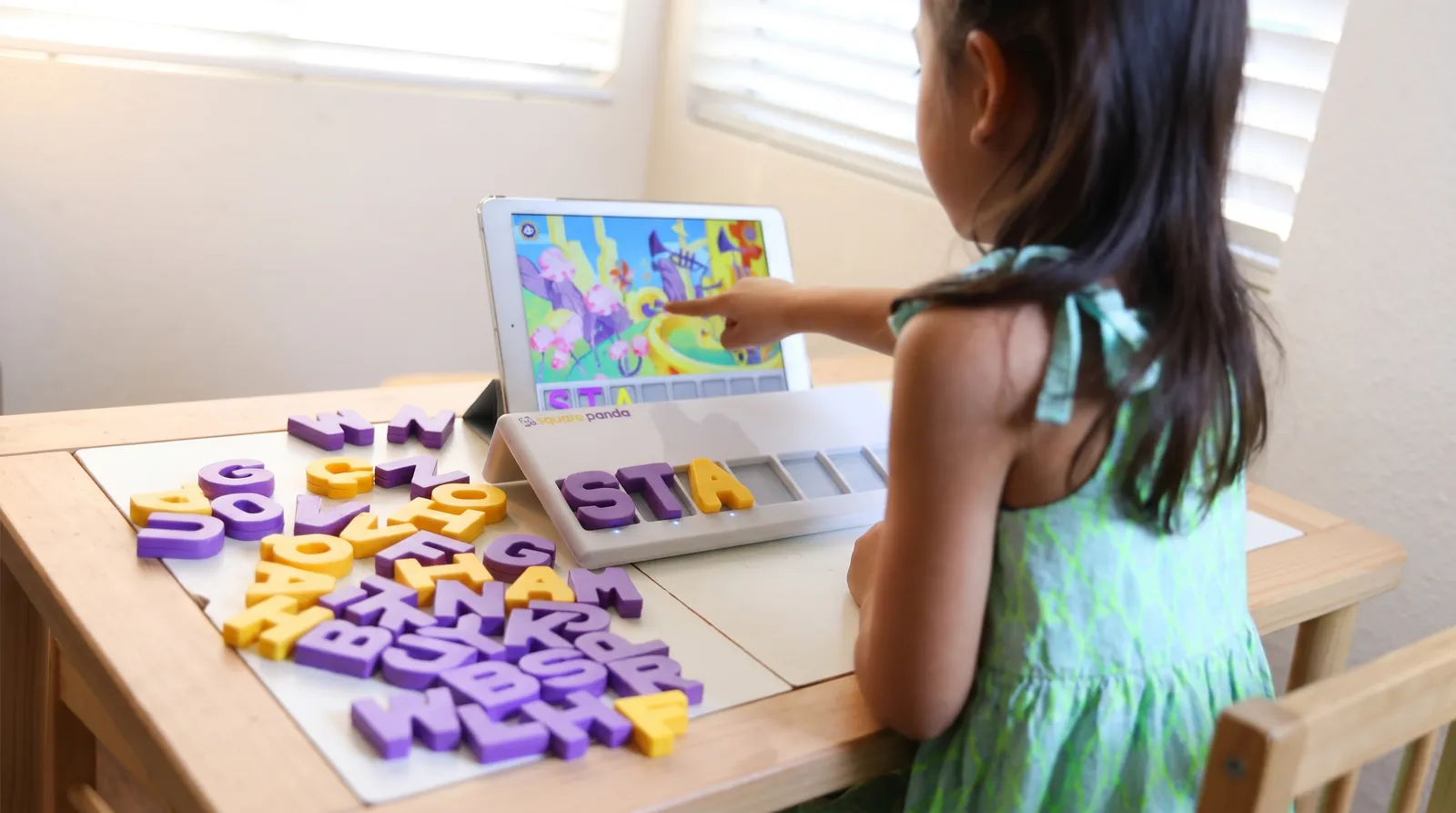
Try it the way kids do
They touch the sound.
Each letter is a physical piece. Placing it makes the sound real and connects the shape to the sound. In one study, kindergartners who explored letters by touch as well as sight could sound out more new words than children who only looked at them.
They build the word.
Kids put letters together to make words like C-A-T, then swap one letter to make B-A-T. That's how reading clicks. Your child experiments with letter sounds and gets instant feedback.
They hear right away if it's right.
No waiting for a grown-up to check. The game responds instantly, so practice stays fun and mistakes get fixed on the spot.
You see what they've learned.
The Parent Portal shows badges earned, words spelled and the skills your child is ready for next.
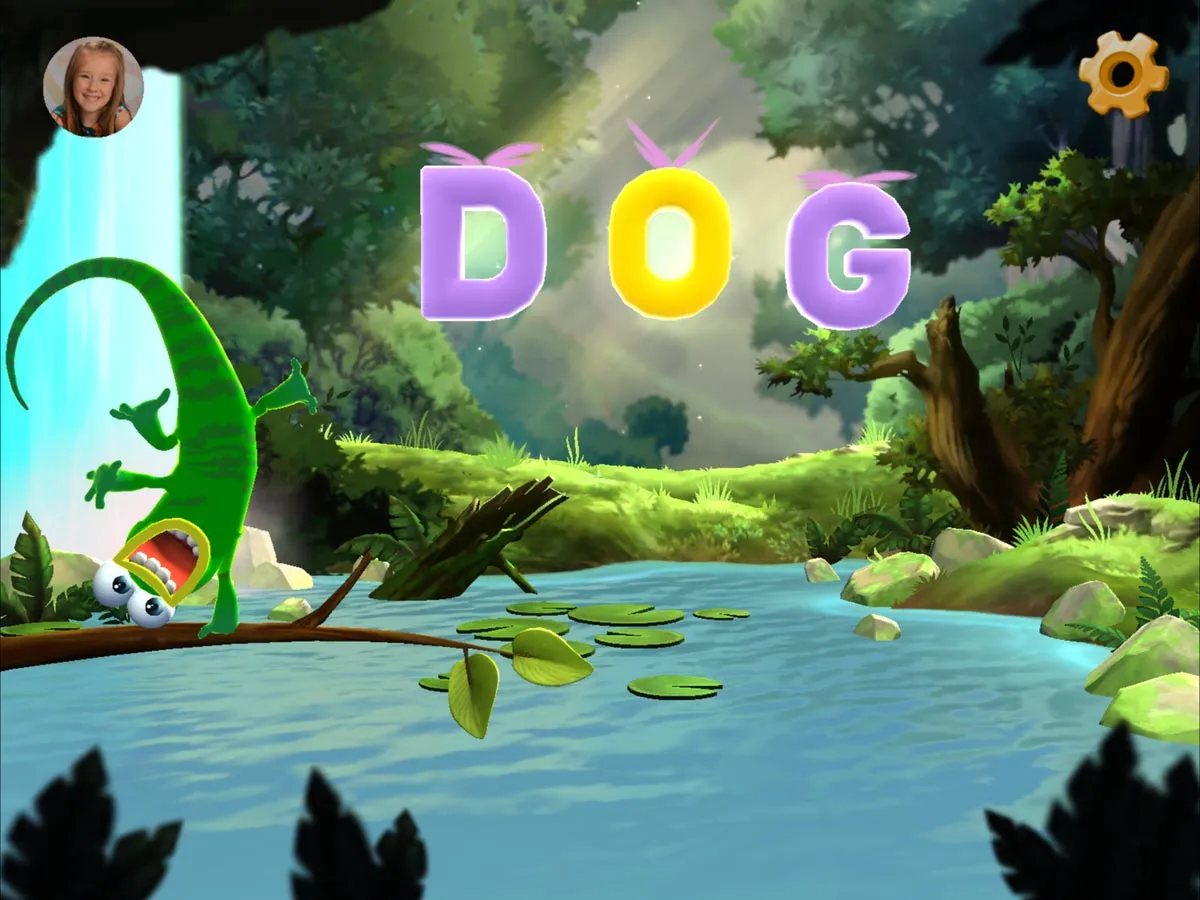
Inside the Lagoon game
Even silly words get a voice.
In the Lagoon game, a chameleon sounds out any word they build, even silly ones, and a picture pops up when they make a real word.
What's in the box
And what it does for your child.
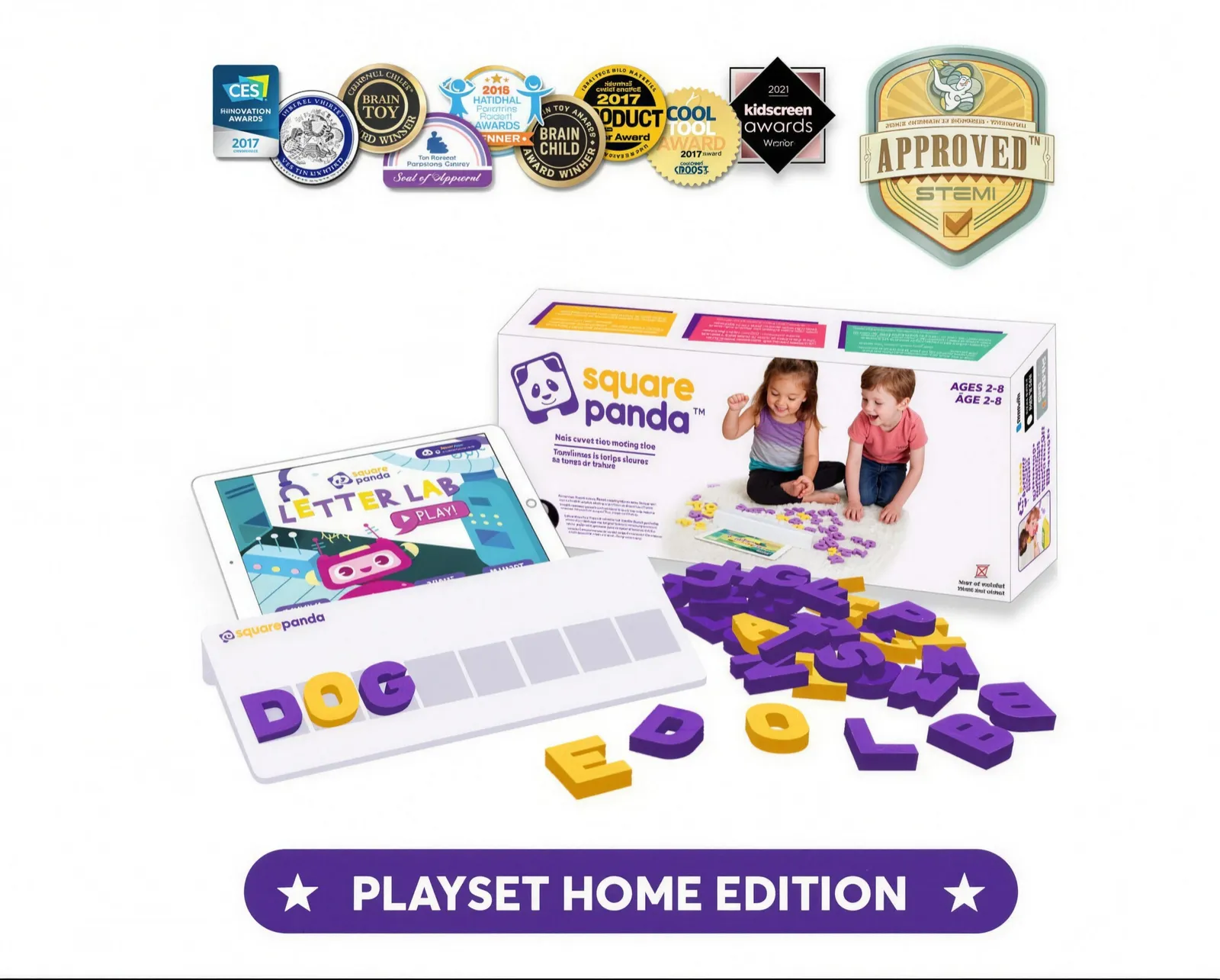
Tablet not included.
- Bluetooth phonics playset
- Turns your iPad or Android tablet into a reading lesson
- 46 tactile letter tiles (Smart Letters)
- Hands-on word building, the way reading specialists teach it
- 11 free learning games
- Letter sounds, rhyming, first and last sounds, blending, spelling and early word reading
- Levels set by your child's age, adjusted as they play
- Not too easy, not too hard
- Up to 3 player profiles
- Siblings each get their own path
- Parent Panda Portal
- See progress without testing your child
- Developed with Stanford University neuroscience researchers; design contributors include Stanford's Dr. Bruce McCandliss and other neuroscientists
- Built on how young brains learn to read
The numbers behind the gap
Early reading needs help now.
US fourth graders don't read proficiently1
of K to 2 students started this school year on track to learn to read2
children not reading well by the end of third grade are four times more likely than strong readers not to finish high school on time3
of parents think their child reads at grade level4
Sources: NAEP 2024, Amplify Oct 2026, Annie E. Casey Foundation, Gallup and Learning Heroes
From a kindergarten study (Square Panda's own). In Mountain View Whisman School District kindergartens in 2018-19 (340 students, 5 schools), an additional 13% of struggling readers reached grade level in letter sounds when classes used Square Panda 2 to 4 times a week. Square Panda research summary
What parents say
Playing, and learning to read while they do.
"My son can play on the iPad, but he's also learning letter recognition and phonics."
"She's picking up her letters and sounds quite quickly now."
"Square Panda is unique and has the potential to create a generation of confident readers."
Tablet not included.
Black Friday
$99.98 $199.99
Save $100.01 on the Phonics Playset with 46 Smart Letters and 11 free games. Offer starts November 3, 2026. Tablet not included.
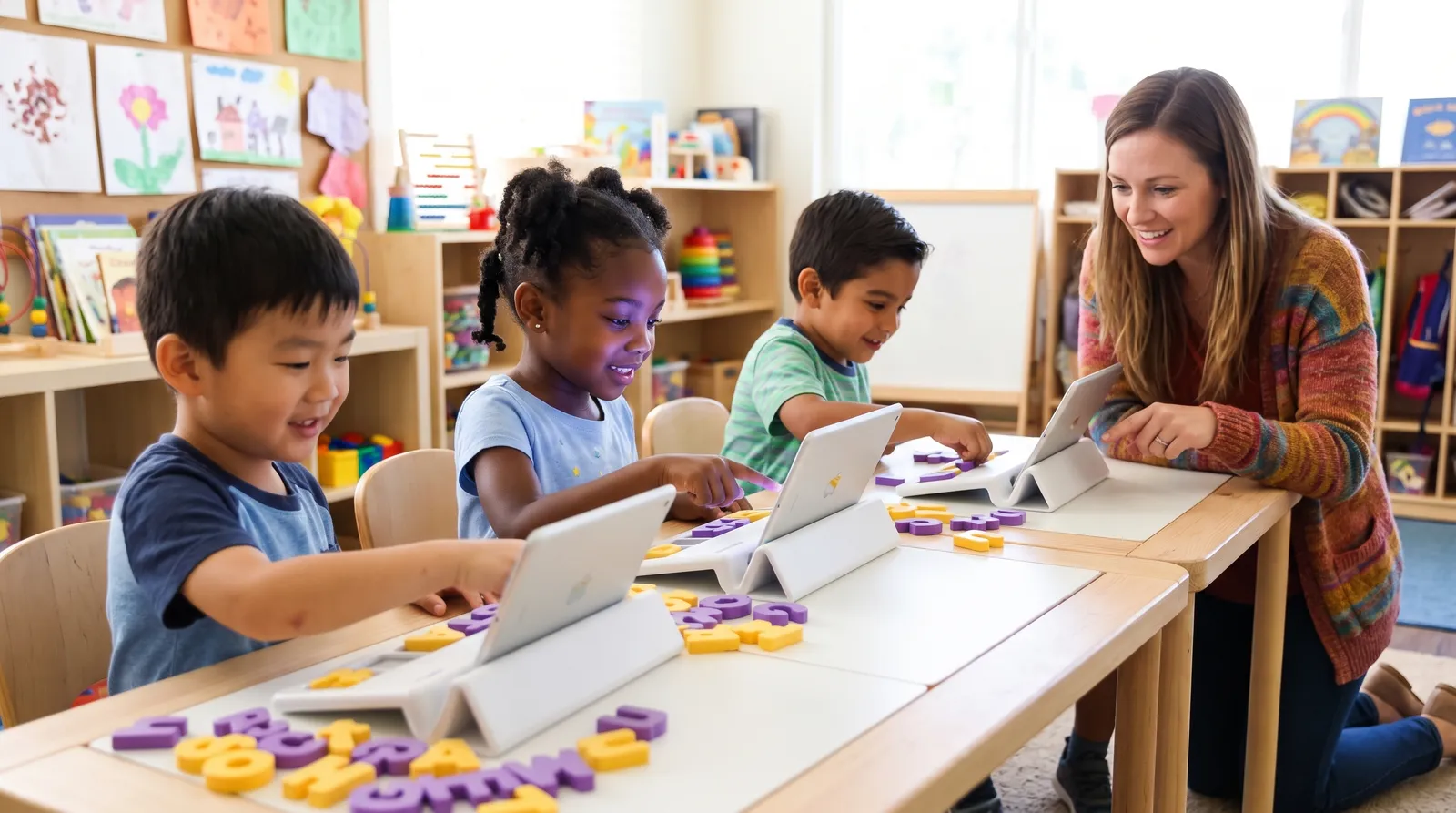
For teachers
Your kids came to you behind, and your day has no extra minutes.
Send families home with a way to practice letter sounds and word building that's actually fun. For your own classroom, Square Panda's Classroom Playset covers up to 30 students with the SquareLand Early Literacy Curriculum, lesson plans and a Teacher Portal to track progress.
"The variety of Square Panda games makes it easy to differentiate instruction."
K. Weatherford, PreK teacher
For classroom pricing, email [email protected].
FAQ
Questions parents ask
What is the Square Panda Phonics Playset?
A Bluetooth phonics playset for children ages 2 to 8. It comes with 46 tactile letter tiles. Kids place letters on the playset, and free learning games on a tablet respond right away, sounding out each word they build.
What age is the Square Panda Playset for?
Ages 2 to 8, the years when letter sounds and word building matter most. Levels are set by your child's age and adjust as they play.
How does Square Panda teach kids to read?
Through phonics. The 11 free games cover letter sounds, rhyming, first and last sounds, blending, spelling and early word reading. Hearing the sounds in words, called phonemic awareness, is one of the two best predictors of how well a child will learn to read, according to the National Reading Panel.10
My child already knows the alphabet. Is it too easy?
Knowing letter names is step one. The games move on to sounds, blending and building real words, and levels adjust as your child plays.
Is Square Panda just more screen time?
No. Your child has to pick up, place and swap real letters to play, so it is active, hands-on practice rather than passive watching. The tablet shows the game; the learning happens in their hands. It's distracted viewing, not staring: about half of each session is spent looking at the tablet, and the rest at the letters and at you. Pediatricians now focus less on minutes and more on quality and on playing alongside your child, so sit beside them and build words together.
What devices does Square Panda work with?
iPad, iPhone and Android tablets (Android 7.1 and up). Amazon Fire tablets are not supported. Wi-Fi is needed to play. The tablet is not included.
Does Square Panda need a subscription?
Download the Square Panda app on the App Store and Google Play to access 11 free games. To read Square Tales, an ebook subscription is required.
When should a child learn to read?
The years from 2 to 8 matter most. Children learn to read until about third grade, then read to learn. Those not reading well by the end of third grade are four times more likely than strong readers not to finish high school on time.3 7 in 10 US fourth graders don't read proficiently.1
What if Square Panda isn't right for us?
The playset has a 1 year warranty. Unopened playsets in original condition can be returned within 15 days of delivery. The customer pays return shipping, and a 25% restocking fee is deducted from the refund. To start a return, email [email protected]. You can cancel an order within 2 hours of purchase, with no penalty, by emailing [email protected].
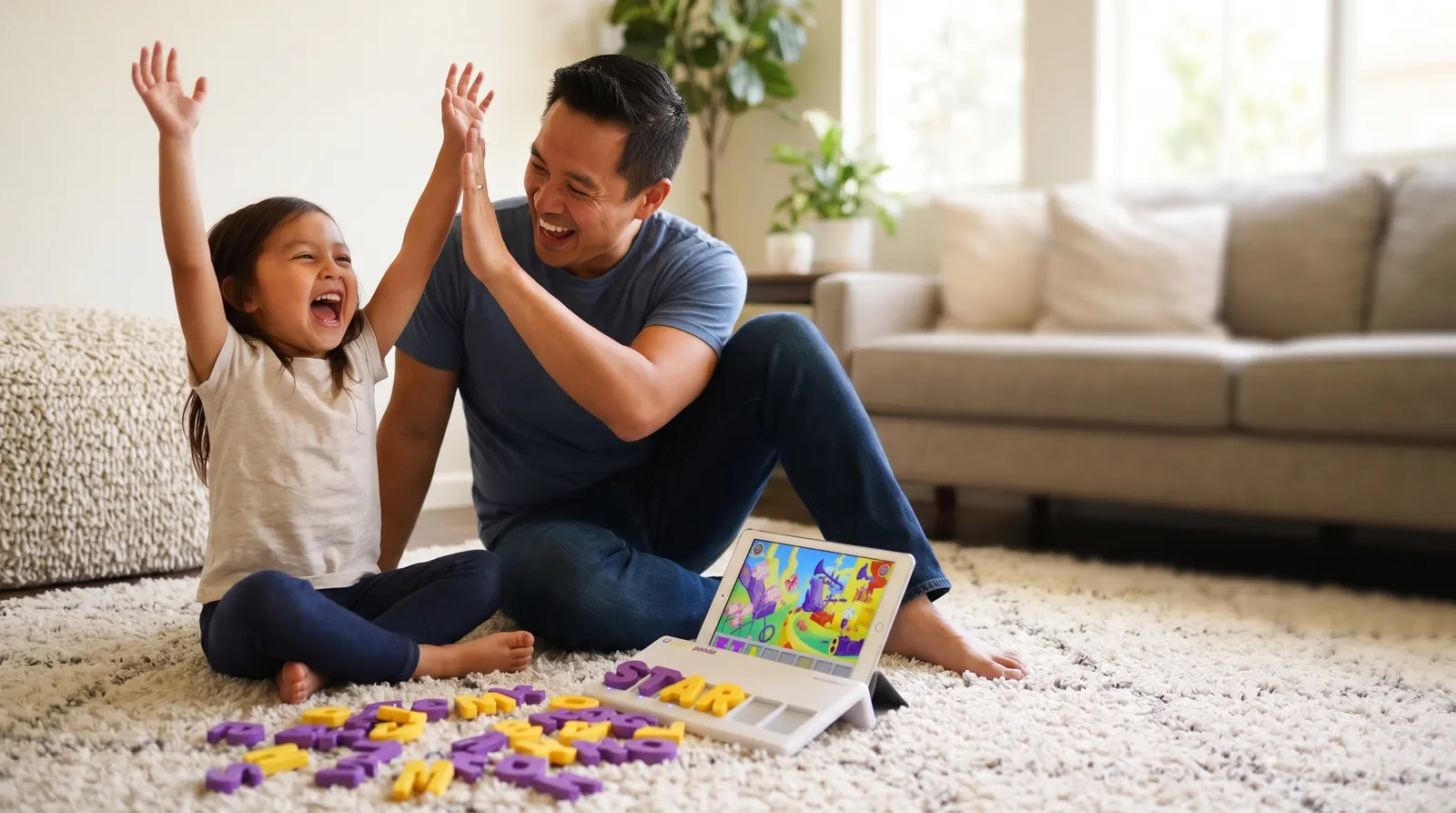
The best time to close the reading gap is before it happens.
A little hands-on phonics every day now is easier than years of catching up later.
Order for $99.98Black Friday price $99.98, regular $199.99.