
The Playset + 6-in-1 Flashcards bundle, for ages 2 to 8
Build the word with real letters. Then say it from a card.
7 in 10 US fourth graders don't read proficiently.1 With this bundle, your child sounds out words by building them with real letters and practices with flashcards. The free app is a short companion you play together, a quick glance to hear a word before your child goes back to the letters and cards. It's a better use of screen time than cartoons. This Black Friday, get the Phonics Playset and the 6-in-1 Flashcards for $125.
Playset and 6-in-1 Flashcards. Black Friday price $125, regular $275. Tablet not included.
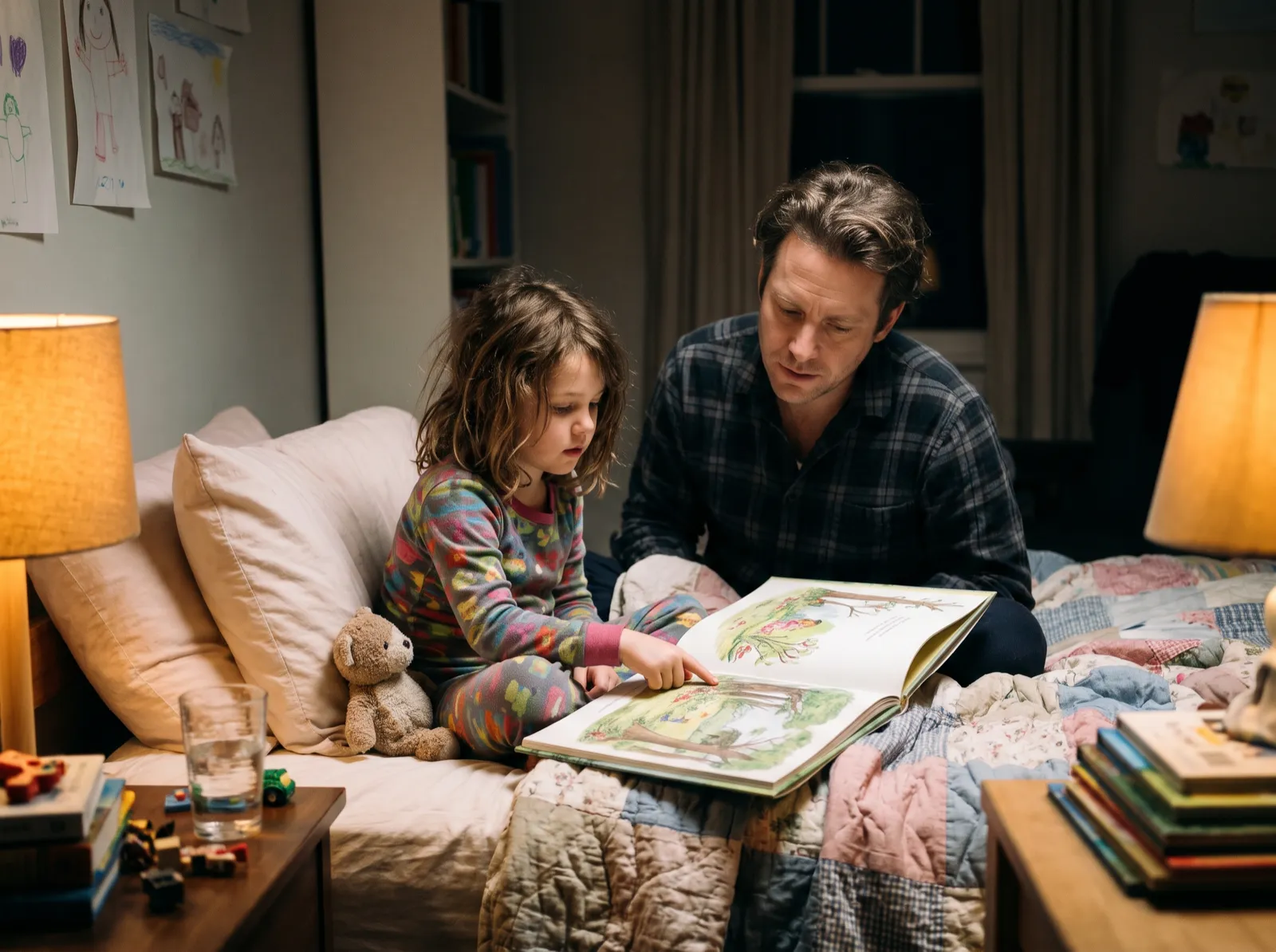
The quiet gap
You can't see the gap until it's big.
You read every night. Their report card says they're doing fine. Then a teacher mentions "reading intervention" and your stomach drops.
You're not alone, and it's not your fault. 88% of parents believe their child reads at grade level, while far fewer than 30% actually do.2 The gap stays quiet in preschool and kindergarten, then shows up in third grade, when reading stops being a subject and becomes how every subject is taught.
Sound familiar?
- They know the alphabet song but freeze on the letter sounds.
- They "read" a favorite book from memory, then can't read the same words on a different page.
- They look at the picture to guess the word.
- They'd rather do anything than read to you.
Why it's happening to so many kids
This isn't about one child. It's generational.
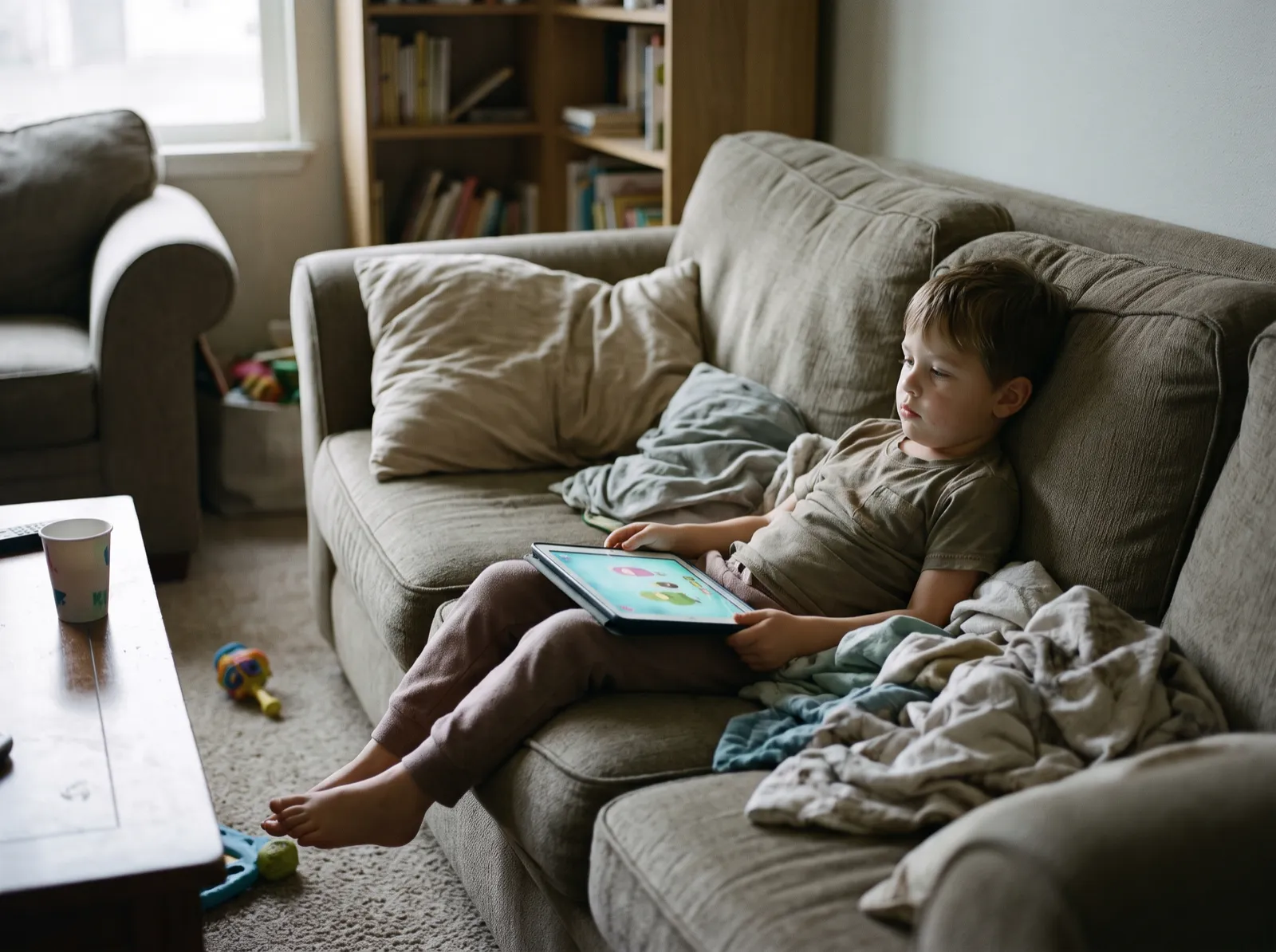
Many kids were taught to guess.
For years, popular programs had children guess words from pictures and context instead of sounding them out. 43 states have since passed laws to bring back phonics, but millions of kids are still taught the old way.3
Help is hard to get.
Most schools offered tutoring, but only about 1 in 10 students received it,4 and the federal recovery money ran out in 2024.5 Many teachers today are still trained in the old way, and don't know how to teach phonics.
Screens fill the gap.
Kids under 9 already spend about 2.5 hours a day on screens.6 If you've ever felt you could do better here, you're in good company: 4 in 10 parents of 2 to 4 year olds say the same. The question is whether any of that time builds reading skills.
US fourth graders don't read proficiently,1 and children not reading well by the end of third grade are four times more likely than strong readers not to finish high school on time.7
Why it matters so much, so early
Until third grade, children learn to read. After that, they read to learn.
Math word problems, science, history, instructions. Early struggles tend to last: in one classic study, a child who was a poor reader at the end of first grade had an 88% chance of still being a poor reader at the end of fourth grade.8 The window to make it easy is now, between 2 and 8.
It starts with sounds
Reading starts with the ear.
English has up to 44 sounds9. Hearing those sounds, called phonemic awareness, is one of the two best predictors of how well a child will learn to read10.
Most kids don't pick it up on their own. In a classic study, only 17% of kindergartners could break a spoken word into its sounds11. And about 9 in 10 young struggling readers have a weakness in exactly this skill12. Nationally, about 69% of 4th graders read below Proficient1. Square Panda starts with letter play that teaches letter sounds your child can hear, see and touch.
Mostly hands-on, a little screen
Kids learn to read with things they can hold.
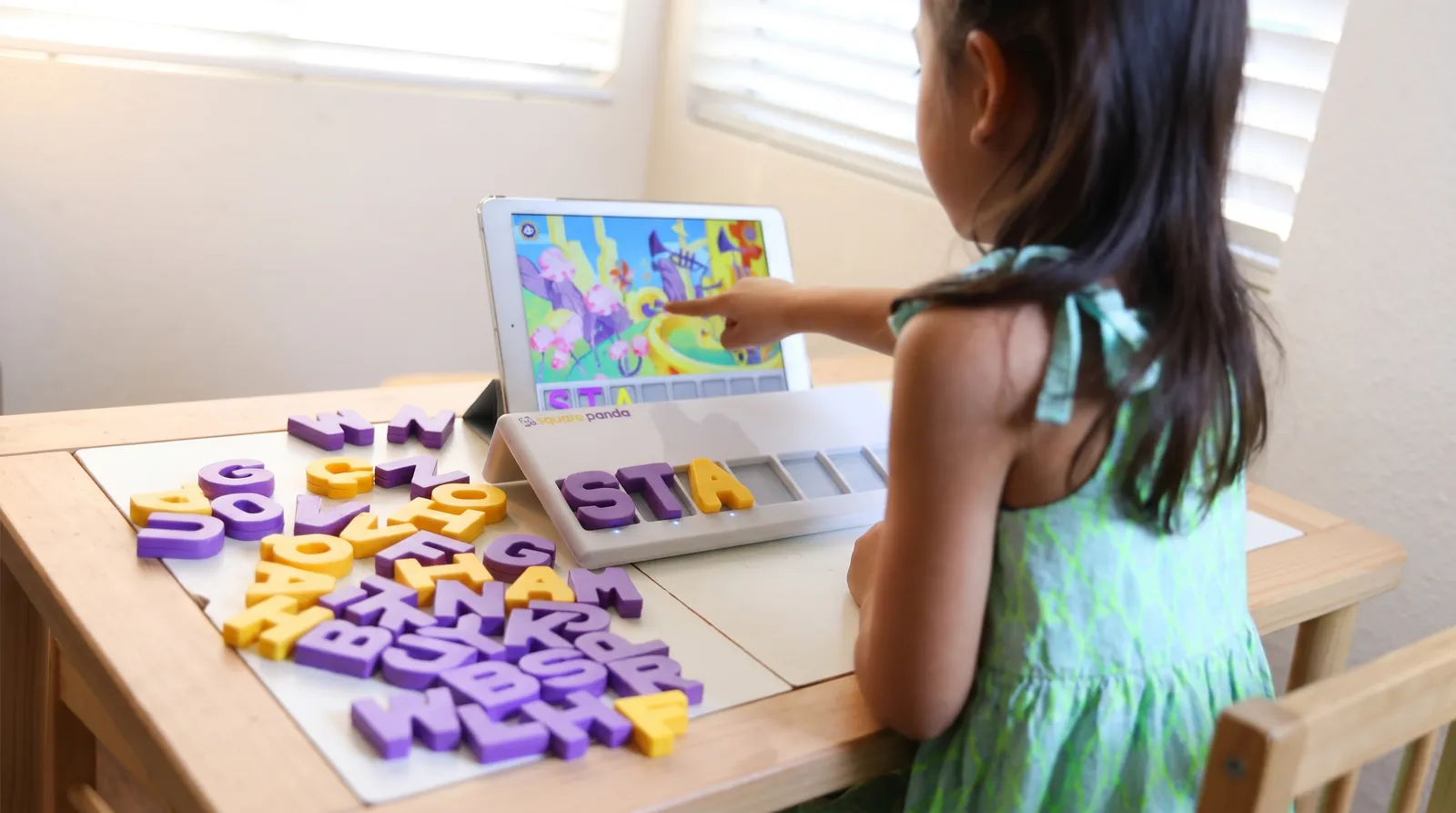
In this bundle, letters and flashcards do most of the work. The tablet's job is small: it sounds out what your child builds. This is called distracted viewing: your child's eyes move between the letters, the cards and the tablet, so the screen gets quick glances, not a long stare. Each part uses a different sense: hands on the letters, eyes on the cards, ears on the sounds, and their own voice saying the word. Over 30 to 40 minutes of play, most of the time is spent with letters and cards, not looking at a screen.
46 real letters to hold, place and swap.
Your child builds each word with physical letter tiles. Swap one letter to make a new word, so the sounds become something they can see and touch.
Flashcards for saying, recalling and checking.
Each card asks your child to say the sounds and recall the word first. The playset and app then check the answer, so practice stays quick and hands-on. Two of the three ways to play with the cards, finding a rhyme and listening for the word, need no screen at all.
The app is a short, shared companion.
The free games sound out each word your child builds and show what to practice next. Placing real letters keeps your child active and engaged, and playing together makes it social, the things researchers say help children learn from apps.13 A better use of screen time than cartoons.
Less than an hour a day is the recommendation. For children 2 to 4, the World Health Organization recommends no more than 1 hour of screen time a day, and says less is better. It also encourages reading and storytelling with a caregiver.14 Screen time isn't recommended under age 2, and Square Panda is for ages 2 and up. The American Academy of Pediatrics now puts the focus on quality, context and conversation, and encourages parents to play alongside their kids.15
So we recommend keeping app time under an hour a day and playing together, with the flashcards carrying more of the practice. If your child is going to have some screen time, it can be learning to read instead of watching cartoons.
How Square Panda helps
A phonics playset your child plays with, not just watches.
It started with one child: co-founder Andy Butler built the first games for his own daughter when he couldn't find anything that both engaged and helped her.
They pick up real letters, place them on the playset, and the game on your tablet responds right away.
 In this bundle: Playset + 6-in-1 Flashcards
Try it the way kids do
They touch the sound.
Each letter is a physical piece. Placing it makes the sound real and connects the shape to the sound.
They build the word.
Kids put letters together to make words like C-A-T, then swap one letter to make B-A-T. That's how reading clicks. Your child experiments with letter sounds and gets instant feedback.
They hear right away if it's right.
No waiting for a grown-up to check. The game responds instantly, so practice stays fun and mistakes get fixed on the spot.
You see what they've learned.
The Parent Portal shows badges earned, words spelled and the skills your child is ready for next.
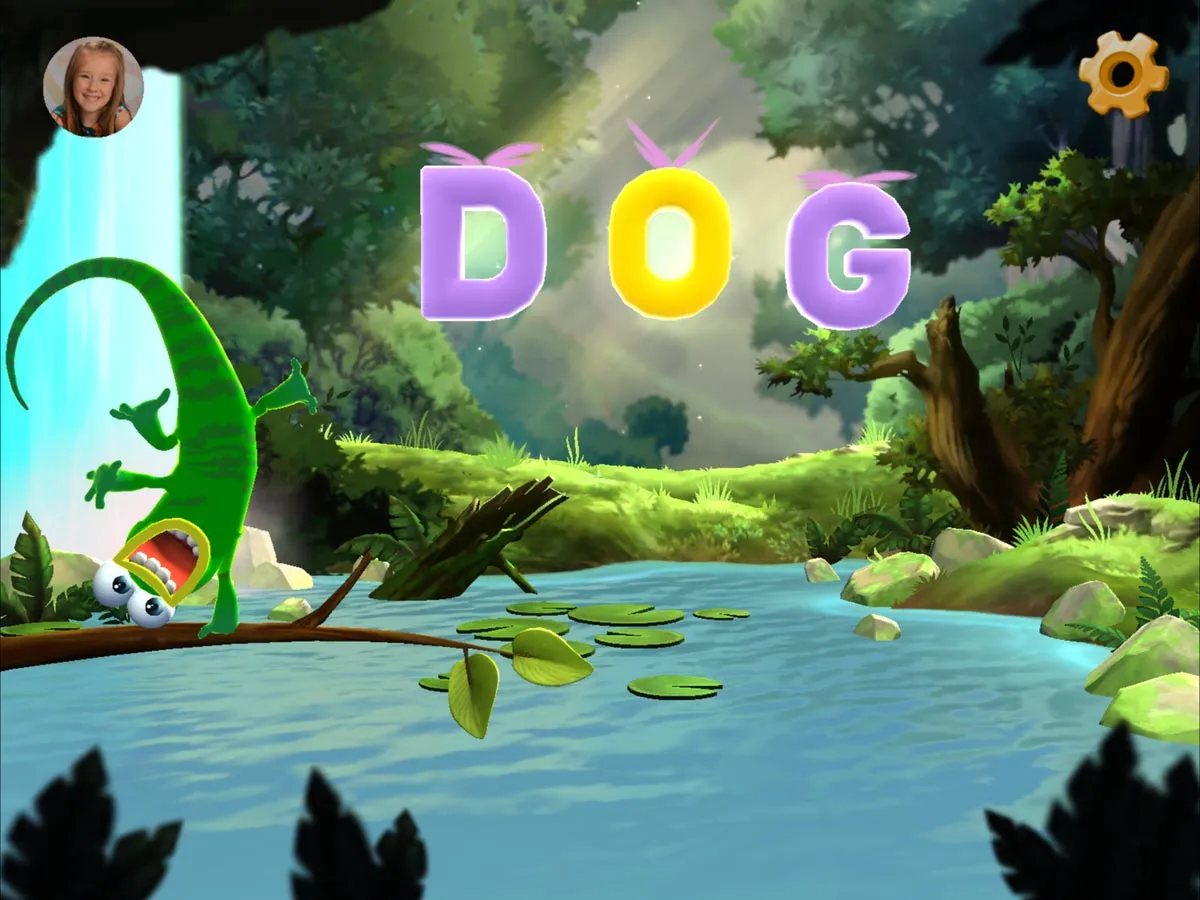
Inside the Lagoon game
Even silly words get a voice.
In the Lagoon game, a chameleon sounds out any word they build, even silly ones, and a picture pops up when they make a real word.
What's in the bundle
The playset, plus the cards that go with it.
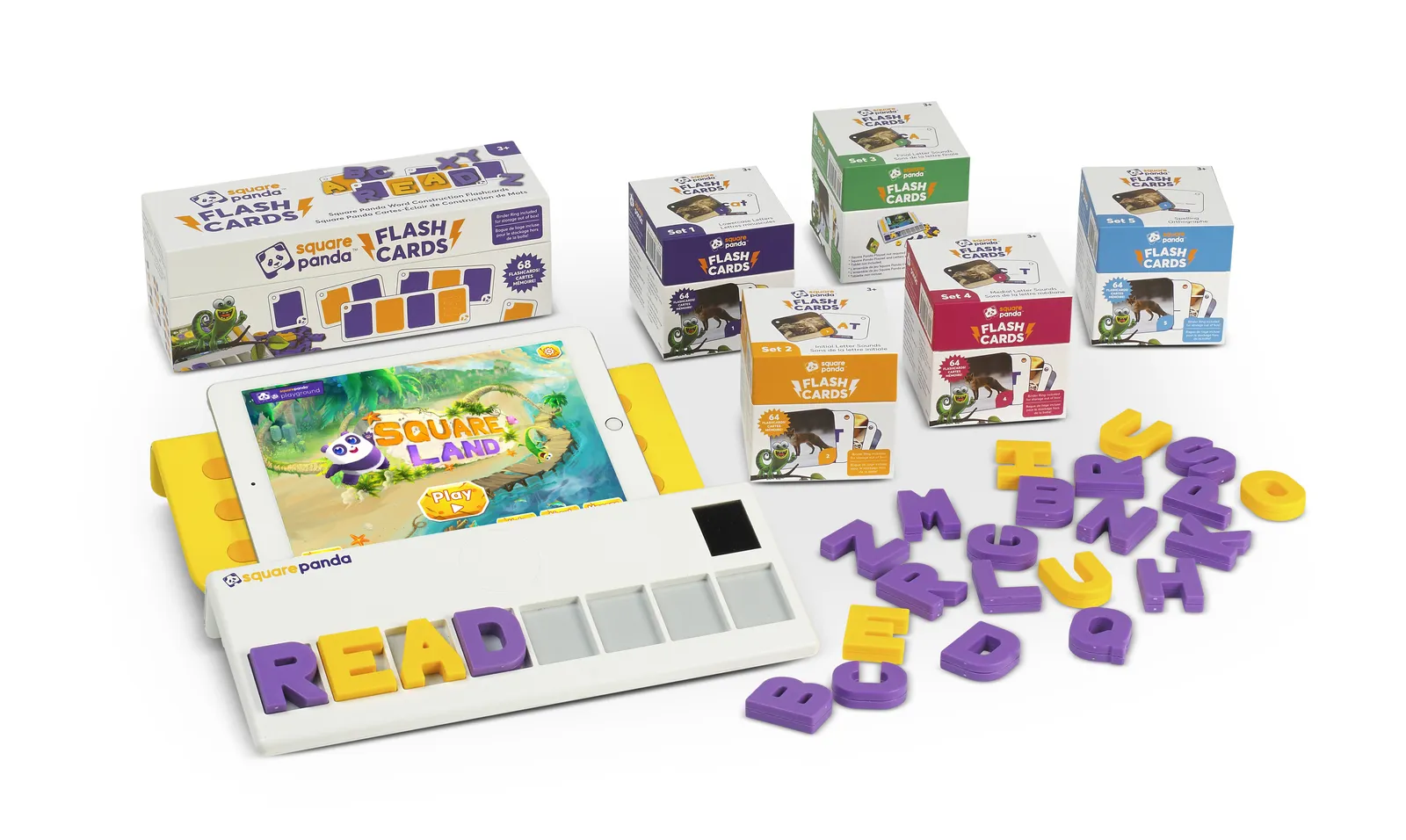
Phonics Playset
The Bluetooth playset with 46 Smart Letters and 11 free learning games.
6-in-1 Flashcards
Six card sets, from first letters to building whole words, made to use with the playset.
Everything in the $125 bundle. Tablet shown for play, not included.
Inside the Phonics Playset box
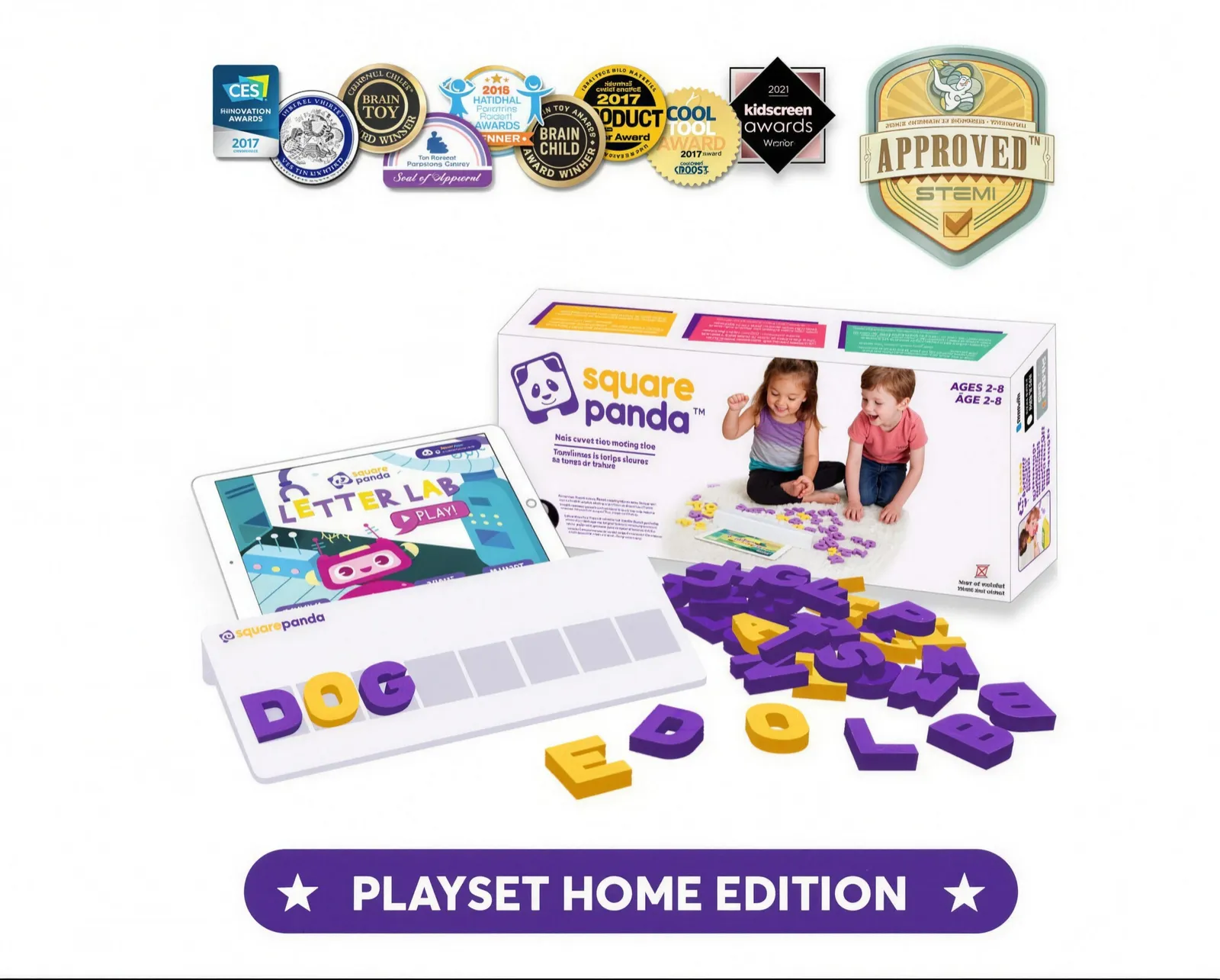 In this bundle: Playset + 6-in-1 Flashcards
Tablet not included.
- Bluetooth phonics playset
- Turns your iPad or Android tablet into a reading lesson
- 46 tactile Smart Letters
- Hands-on word building, the way reading specialists teach it
- 11 free learning games
- Letter sounds, rhyming, first and last sounds, blending, spelling and early word reading
- Levels set by your child's age, adjusted as they play
- Not too easy, not too hard
- Up to 3 player profiles
- Siblings each get their own path
- Parent Panda Portal
- See progress without testing your child
- Design contributors include Stanford's Dr. Bruce McCandliss and other neuroscientists
- Built on how young brains learn to read
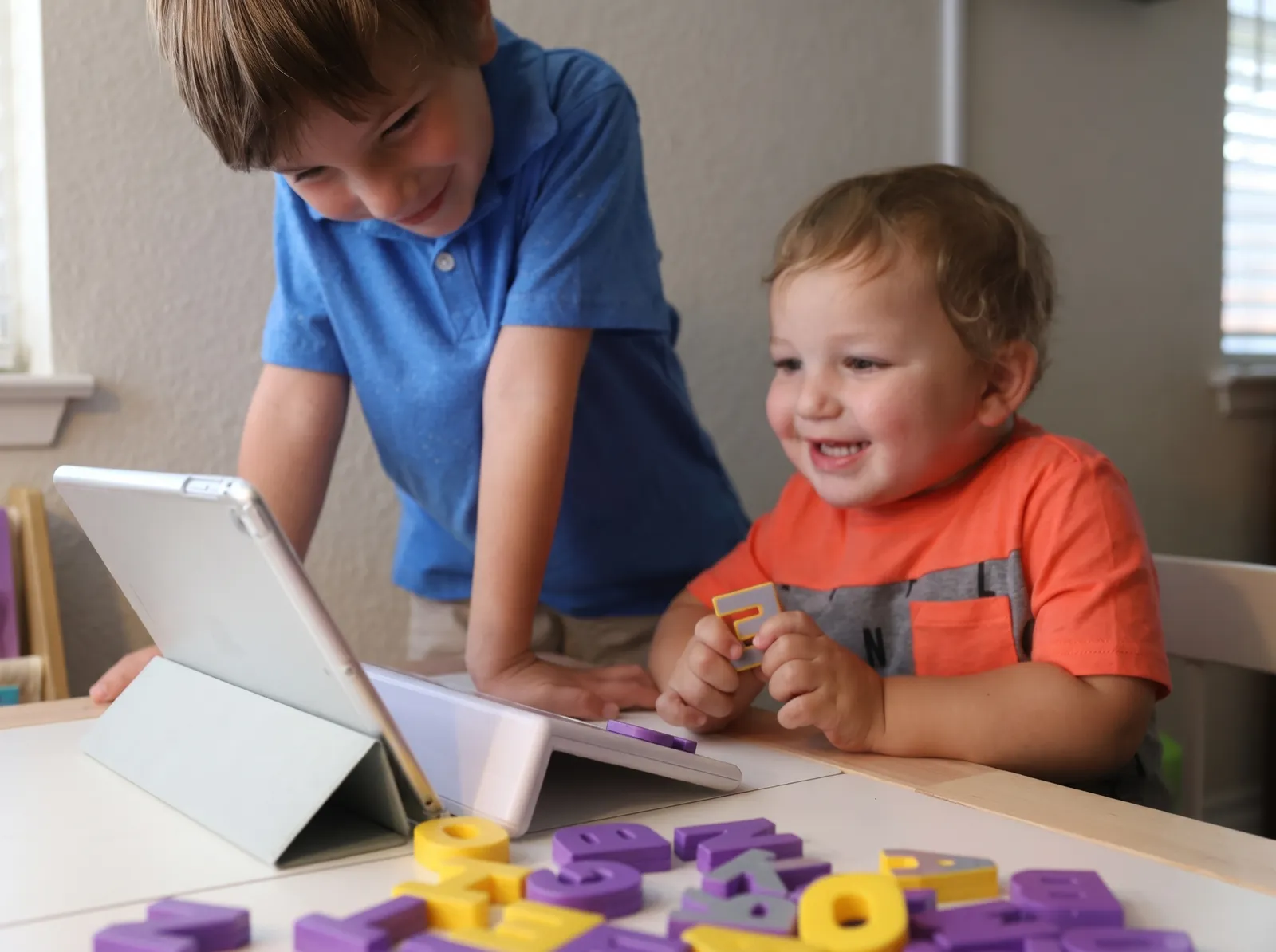 In this bundle: Playset + 6-in-1 Flashcards
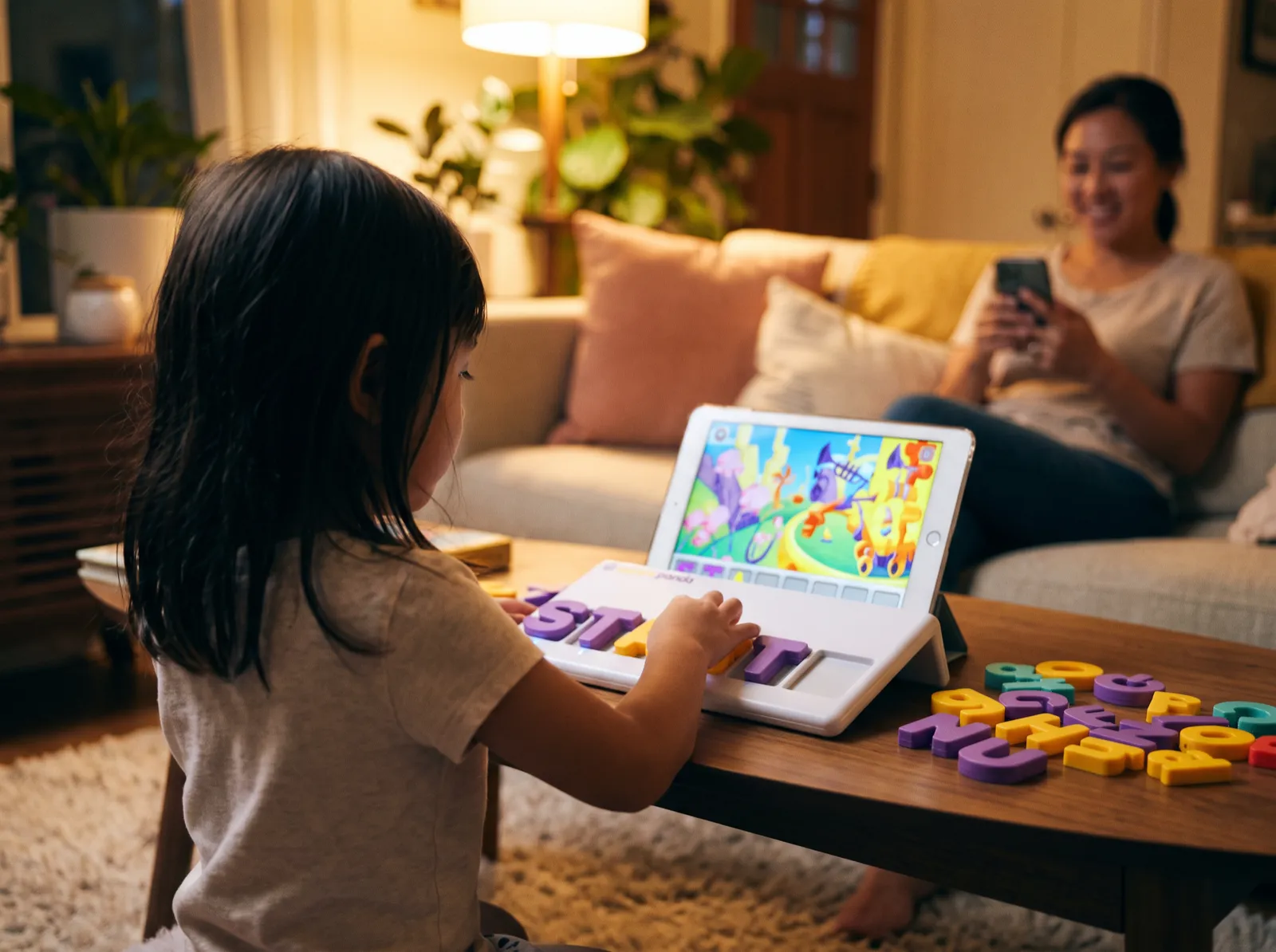 In this bundle: Playset + 6-in-1 Flashcards
6-in-1 Flashcards
Six card sets that send them back to the letters.
Each card gives your child one small job: find the first sound, the last sound or the middle sound, or build a word. Then they place the letters on the playset and tap the chameleon in the Lagoon game to hear it.
Consonants are purple and vowels are yellow, just like the Smart Letters, so the cards and the letters speak the same language. The instructions come in English and Spanish.
- 1
Lowercase Letters
Match each letter shape to the Smart Letter.
- 2
Initial Letter Sounds
Find the first sound in a word.
- 3
Final Letter Sounds
Find the last sound.
- 4
Medial Letter Sounds
Find the sound in the middle, usually the vowel.
- 5
Spelling (CVC)
Spell short words like C-A-T.
- 6
Word Construction
Build longer words with 22 color-coded word patterns.
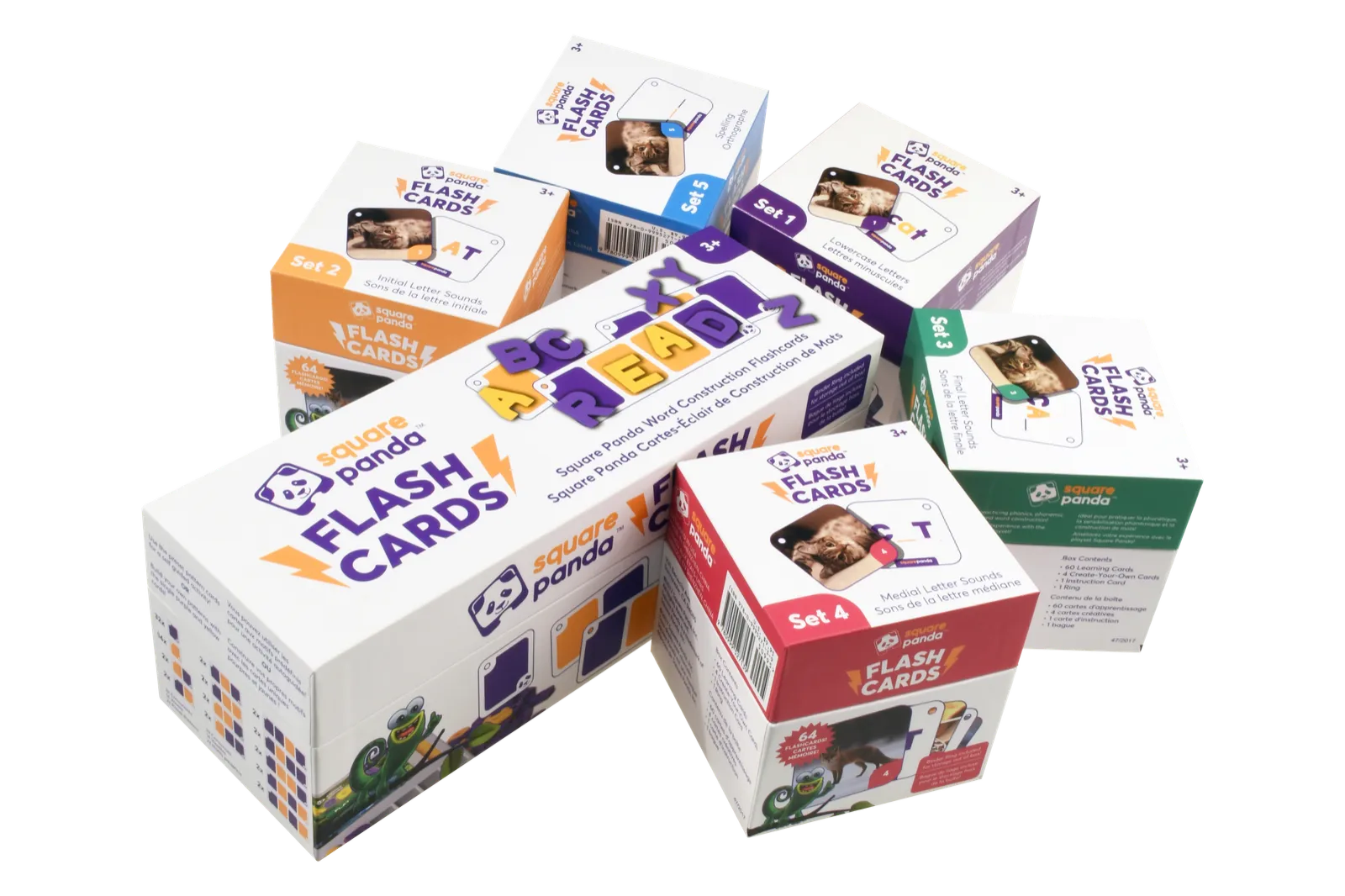
All six card sets come in the bundle.
Three easy ways to play with the cards
Pick a card, find the letters, place them on the playset and tap the chameleon to hear the word. Every card ends this way.
Say the card's word out loud and take turns thinking of words that rhyme with it: pop, top, mop. Silly made-up words count too.
Set one card out before a favourite story or song. Your child gives a thumbs up each time they hear the word.
What the research says
The methods behind the bundle have research behind them.
Hands-on letter sounds, quick recall practice in short sessions. Here's what studies have found about each.
Knowing letter names and sounds early is one of the strongest signs of later reading success.
The National Early Literacy Panel found that knowing the alphabet and hearing the sounds in words have medium to large links with later reading and writing.
Step-by-step phonics helps children learn to read and spell, with the biggest gains when it starts early.
The National Reading Panel found systematic phonics helped children from kindergarten to 6th grade, with the largest effects in kindergarten and first grade.
Source: National Reading Panel, 2000
Building words with letters is a recommended practice.
A What Works Clearinghouse guide from the U.S. Department of Education rates linking sounds to letters and decoding words as practices with strong evidence, and suggests letter tiles to mark the sounds children hear.
Recalling an answer, then checking it, helps children remember.
In a small study, preschoolers remembered 89% of items they practiced by recalling them with a prompt and quick feedback, against 42% of items they only looked at again.
Source: Kliegl, Abel and Bäuml, 2018, Frontiers in Psychology
Short practice spread over several days beats one long session.
Children taught in sessions spread out over time remembered and used what they learned better a week later than children taught all at once.
These studies looked at teaching methods, not at Square Panda products. Every child is different, so talk with your child's teacher or therapist about what fits.
The numbers behind the gap
Early reading needs help now.
US fourth graders don't read proficiently1
of K to 2 students started this school year on track to learn to read16
children not reading well by the end of third grade are four times more likely than strong readers not to finish high school on time7
of parents think their child reads at grade level2
Sources: NAEP 2024, Amplify Oct 2026, Hernandez, 2011, Gallup and Learning Heroes
Black Friday bundle
Playing, and learning to read while they do.
Give my child a reading head start, $125Tablet not included.
Black Friday bundle
$125 $275
The Phonics Playset with 46 Smart Letters and 11 free games, plus the 6-in-1 Flashcards. Offer starts November 3, 2026. Tablet not included.
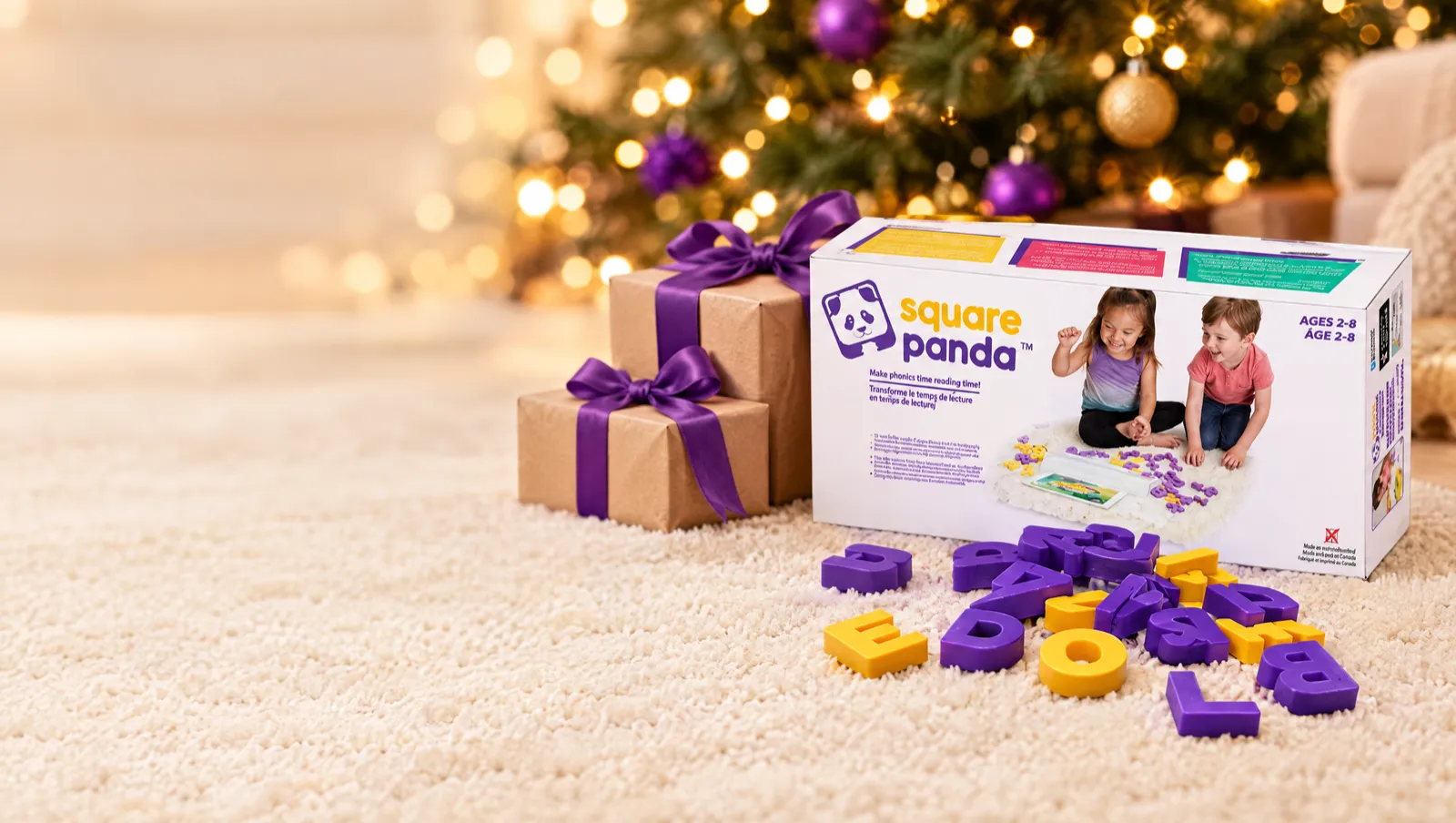 In this bundle: Playset + 6-in-1 Flashcards
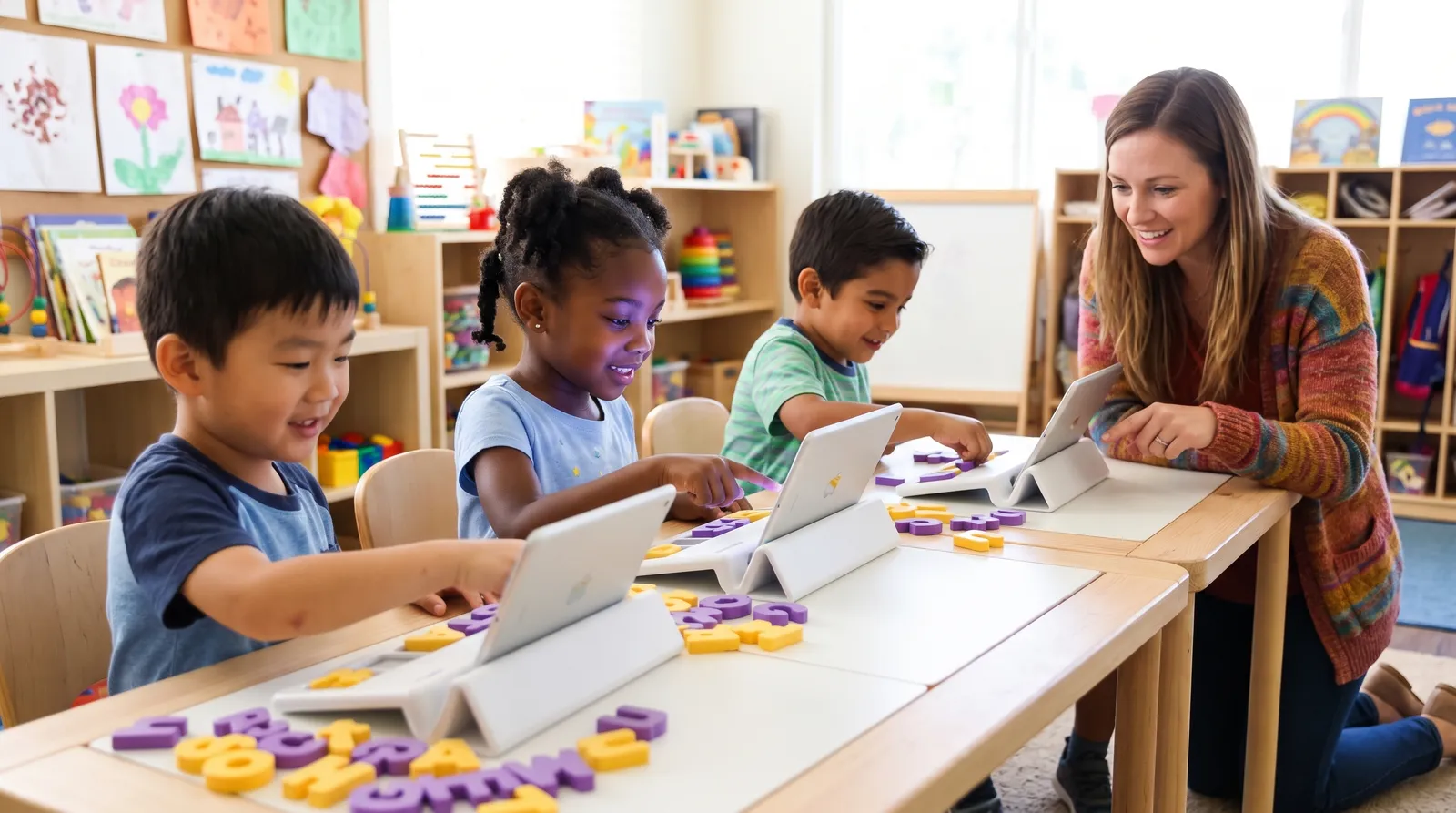 In this bundle: Playset + 6-in-1 Flashcards
For teachers
Your kids came to you behind, and your day has no extra minutes.
Send families home with a way to practice letter sounds and word building that's actually fun. For your own classroom, Square Panda's Classroom Playset covers up to 30 students with the SquareLand Early Literacy Curriculum, lesson plans and a Teacher Portal to track progress.
For classroom pricing, email [email protected].
FAQ
Questions parents ask
What is the Square Panda Phonics Playset?
A Bluetooth phonics playset for children ages 2 to 8. It comes with 46 tactile letter tiles. Kids place letters on the playset, and free learning games on a tablet respond right away, sounding out each word they build.
What age is it for?
Ages 2 to 8, the years when letter sounds and word building matter most. Levels are set by your child's age and adjust as they play.
How does Square Panda teach kids to read?
Through phonics. The 11 free games cover letter sounds, rhyming, first and last sounds, blending, spelling and early word reading. Hearing the sounds in words, called phonemic awareness, is one of the two best predictors of how well a child will learn to read, according to the National Reading Panel.10
My child already knows the alphabet. Is it too easy?
Knowing letter names is step one. The games move on to sounds, blending and building real words, and levels adjust as your child plays.
How much screen time does the bundle need?
The screen is the small part. Your child learns with things they hold: real letters to place and swap, flashcards to say and recall. The free app is a short companion that sounds out the words they build. It's distracted viewing: a glance at the tablet to hear the word, then back to the letters and cards. Over 30 to 40 minutes of play, most of the time is spent off the screen. For children 2 to 4, the World Health Organization recommends no more than 1 hour of screen time a day, and says less is better. It also encourages reading and storytelling with a caregiver.14 So we recommend less than an hour of screen time a day, played together. And when your child does use a screen, it can be learning to read instead of watching cartoons. Square Panda is for ages 2 and up.
Do the flashcards work without the playset?
They're made to go with it. Every card ends the same way: place the letters on the playset and tap the chameleon in the Lagoon game to hear the word. That's why they come together in this bundle.
What devices does Square Panda work with?
iPad, iPhone and Android tablets (Android 7.1 and up). Amazon Fire tablets are not supported. Wi-Fi is needed to play. The tablet is not included.
Does Square Panda need a subscription?
Download the Square Panda app on the App Store and Google Play to access 11 free games. To read Square Tales, an ebook subscription is required.
When should a child learn to read?
The years from 2 to 8 matter most. Children learn to read until about third grade, then read to learn. Those not reading well by the end of third grade are four times more likely than strong readers not to finish high school on time.7 7 in 10 US fourth graders don't read proficiently.1
What if Square Panda isn't right for us?
The playset has a 1 year warranty. Unopened items in original condition can be returned within 15 days of delivery. The customer pays return shipping, and a 25% restocking fee is deducted from the refund. To start a return, email [email protected]. You can cancel an order within 2 hours of purchase, with no penalty, by emailing [email protected].
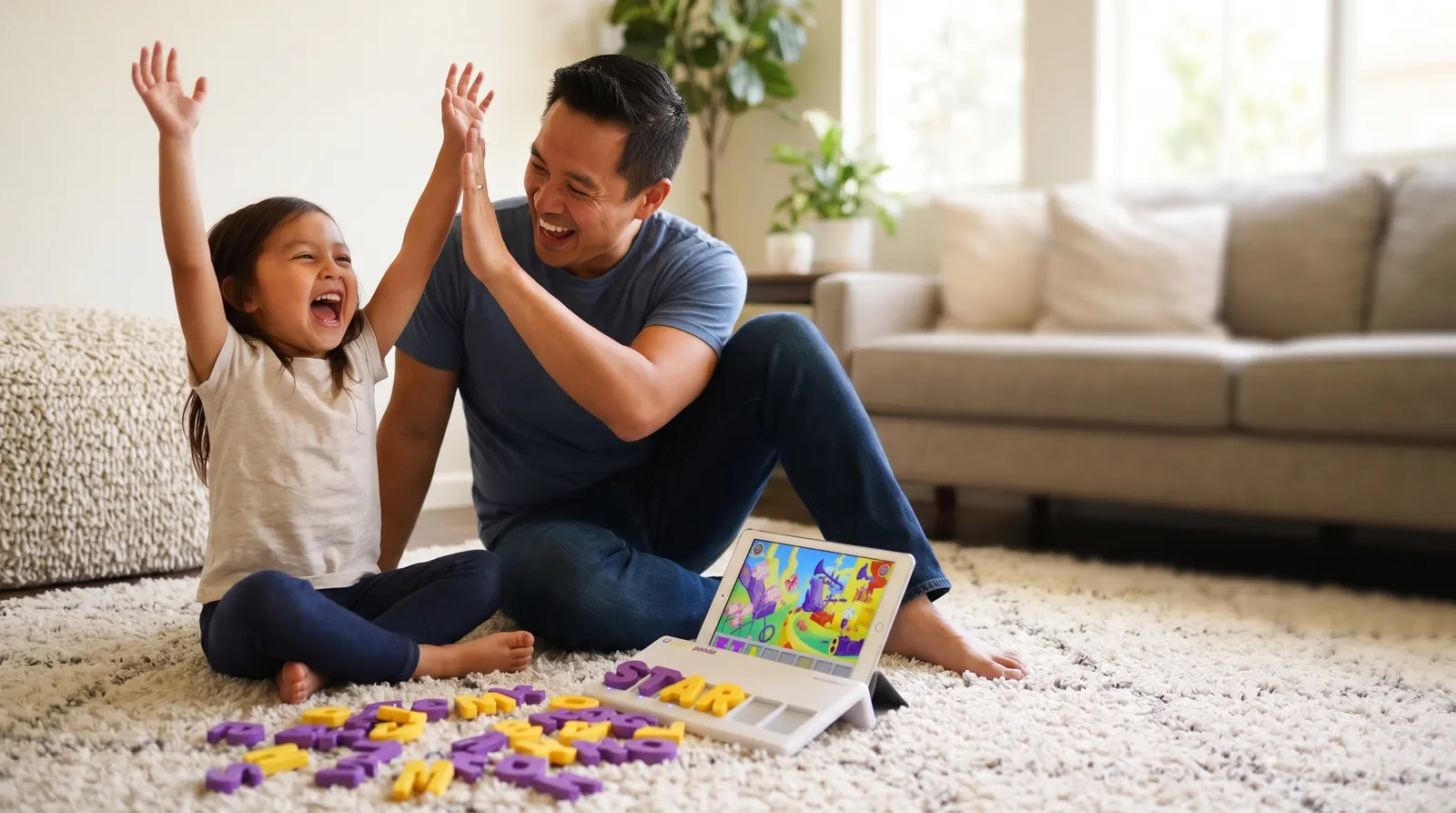 In this bundle: Playset + 6-in-1 Flashcards
The best time to close the reading gap is before it happens.
A little hands-on phonics every day now is easier than years of catching up later.
Order the bundle for $125Black Friday price $125, regular $275.